

Key Highlights
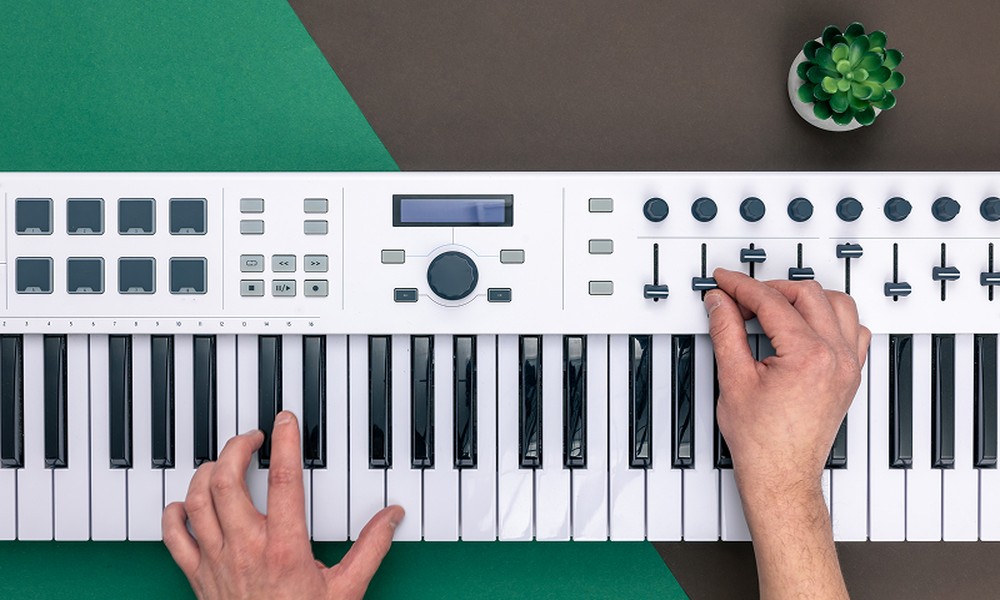
- Keyboard training enhances fine motor skills and hand-eye coordination through tactile feedback.
- Integrating music theory provides a logical framework that allows the brain to predict and execute complex movements.
- Body intelligence is developed when physical action and theoretical understanding become a single, fluid response.
Introduction
The journey of mastering a musical instrument is deeply rooted in the development of body intelligence. This concept refers to the ability of the brain to coordinate physical movements with precision, timing, and spatial awareness. When students enrol in keyboard classes in Singapore, they are engaging in a sophisticated form of physical conditioning. This physical training is significantly bolstered when paired with music theory lessons in Singapore, which students use to decode the structure of what they play. By understanding the “why” behind the notes, the body learns to react more intuitively.
The Physicality of Keyboard Proficiency
Keyboard instruments require a unique blend of strength and delicacy that challenges the small muscles of the hands and forearms. When individuals participate in keyboard classes in Singapore, they begin by developing an awareness of their posture and finger placement. The act of independent finger movement forces the nervous system to create new pathways. Over time, these movements transition from conscious efforts to subconscious habits.
The Cognitive Map of Music Theory
While physical practice builds the muscles, music theory provides the map that guides them. Engaging in music theory lessons in Singapore allows a student to see the keyboard as a structured landscape. When a player understands scales, chords, and intervals, their brain can group information into logical patterns. This process, known as chunking, reduces the cognitive load during performance. Instead of thinking about ten individual notes, the brain recognises one single chord structure.
Synchronising Sight and Touch
One of the most complex tasks for a musician is the simultaneous processing of visual stimuli and physical response. In the context of keyboard classes in Singapore, students learn to read sheet music while their hands move across the keys without constant visual confirmation. This develops a high level of proprioception, which is the sense of self-movement and body position. This anticipation is a hallmark of body intelligence, reducing errors and increasing the fluidity of the performance.
The Role of Rhythm in Motor Control
Rhythm is the heartbeat of music, and mastering it requires an internalised sense of time. Through music theory lessons in Singapore, learners study time signatures and rhythmic values. This theoretical understanding is then applied physically during keyboard practice. The body must learn to maintain a steady pulse while executing syncopated patterns or polyrhythms. This bilateral integration is a powerful exercise for the brain, enhancing overall physical coordination that extends well beyond the music room.
Emotional Expression through Physical Nuance
Body intelligence encompasses the ability to convey emotion through physical touch. In advanced keyboard classes in Singapore, students explore the mechanics of touch and how the weight of the arm can change the tone of a note. Music theory supports this by teaching students about dynamics, phrasing, and the historical context of a piece. When a student understands the emotional intent behind a minor chord or a crescendo, their body responds with the appropriate physical pressure.
Building Resilience and Muscle Memory
The repetition required to master a keyboard piece is a test of both physical and mental endurance. By incorporating the insights gained from music theory lessons in Singapore, educators can help students practice more effectively. Once the body has memorised the movements through a combination of physical repetition and theoretical understanding, the performer can focus on higher-level artistry. This resilience allows musicians to perform under pressure, as their body intelligence takes over even when nerves might otherwise interfere.
Long-term Benefits of Integrated Learning
Students who pursue keyboard classes in Singapore often find that their improved focus and coordination assist them in other areas of life. The discipline of music theory lessons in Singapore that students complete fosters an analytical mindset that is invaluable in problem-solving. Ultimately, building body intelligence through music is about developing a deeper connection between the mind and the physical world. This integrated approach ensures that the learner becomes a well-rounded musician with a profound understanding of their own physical and creative capabilities.
Conclusion
The marriage of physical practice and theoretical study is what truly unlocks a student’s potential at the keyboard. By engaging in keyboard classes in Singapore, learners develop the essential motor skills and proprioception needed for technical mastery. Understanding the structure of music simplifies the physical demands of the instrument. Physical practice brings the abstract concepts of theory to life. This holistic approach ensures that every note played is a reflection of a well-coordinated mind and body.
Speak with Huckleberry Music to discover how our integrated programmes can help you or your child develop lasting musical skills and body intelligence today.
