

Key Highlights
- Visualising chemical bonding through interactive models improves the retention of abstract atomic theories.
- Mastering the mole concept early is the foundation for solving over fifty per cent of the quantitative exam questions.
- Identifying keyword triggers in exam questions allows students to provide the exact phrasing required by examiners.
- Small group tuition environments offer the tailored feedback necessary to correct specific misconceptions in organic chemistry.
Introduction
Transitioning from general science to the rigours of the O Level curriculum can be a significant hurdle for many secondary school students. The leap into Pure Chemistry, in particular, requires a shift from simple memorisation to deep conceptual application and logical reasoning. However, with the right approach and the support of O-level pure chemistry tuition, these challenges can be turned into opportunities for academic excellence.
The Jump to Pure Chemistry
The move to Pure Chemistry involves a much broader syllabus than the Combined Science alternative, requiring a more nuanced understanding of how substances interact. Enrolling in O-level pure chemistry tuition provides a structured environment where these complex ideas are broken down into digestible parts. The key hack here is to build a concept map for every chapter. Instead of reading through notes linearly, try to draw connections between different topics, such as how bonding affects physical properties like melting points and electrical conductivity.
Decoding Periodic Table Trends
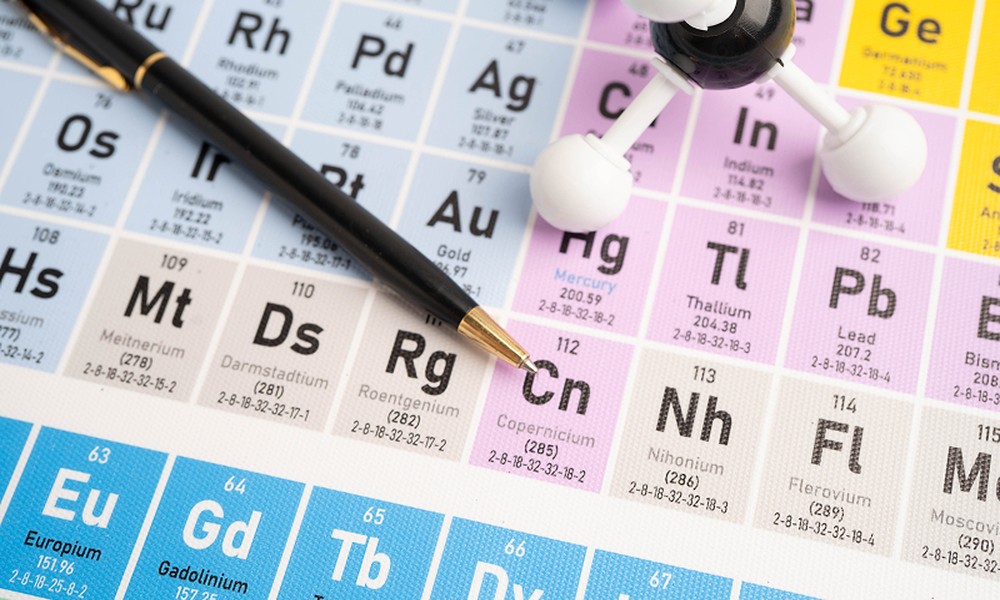
One of the most effective hacks for any student is to master the trends across periods and down groups. Understanding why reactivity increases in Group I but decreases in Group VII allows you to predict the behaviour of elements you have never even studied. During O-level chemistry tuition, tutors often focus on the relationship between electronic configuration and chemical properties. A great tip is to always relate your answer to the number of valence electrons and the ease with which an atom gains or loses them.
Mastering Stoichiometry and the Mole Concept
For many, the mole concept is the most intimidating part of the syllabus because of its mathematical nature. However, it is the bedrock of almost all chemical calculations. The hack for stoichiometry is to always work in moles first. Professionals in O-level pure chemistry tuition often use the bridge method to help students visualise this transition.
The Secret to Scoring in Organic Chemistry
Organic Chemistry often feels like learning a new language with its prefixes, suffixes, and long molecular chains. The secret hack to scoring well here is to focus on functional groups. Instead of memorising every single reaction for alkanes, alkenes, and alcohols separately, learn the characteristic reactions of the functional group itself. In O-level chemistry tuition sessions, students are taught to look for these functional signatures.
Strategic Use of Practical Lab Work
The Practical Assessment (Paper 3) is a significant component of the final grade, yet it is often the least practised area. To hack the practical exam, you must become an expert at observation and recording. During O-level pure chemistry tuition, students often get the chance to refine their lab techniques and learn the tricks of qualitative analysis. Always remember to check for gases even if you don’t expect them, and be meticulous with your titration readings.
Bridging the Learning Gap with Tuition
O-level chemistry tuition plays a pivotal role. The primary hack here is the ability to ask “why” until the concept clicks. In a smaller group or one-on-one setting, the tutor can identify the specific mental block that is preventing you from understanding a topic like electrolysis or redox. They can provide alternative explanations or analogies that make the abstract more concrete. Consistent support ensures that your progress is steady and that you are never left behind as the syllabus advances.
Exam Strategy and Time Management
The hack for Paper 2 (Theory) is to scan the paper first and tackle the questions you are most confident about. For Paper 1 (MCQ), the key is elimination. Often, two of the four options are clearly incorrect, and by narrowing it down, you significantly increase your chances of choosing the right answer. Experienced tutors in O-level pure chemistry tuition will often put you through timed trials to help you get used to the pressure.
Conclusion
Succeeding in O-Level Pure Chemistry is an achievable goal for any student who is willing to move beyond basic memorisation and embrace a more strategic way of learning. By using concept maps to link topics, mastering the mole concept as a mathematical tool, and focusing on functional groups in organic chemistry, you can simplify even the most daunting chapters. Remember that chemistry is a logical subject; everything happens for a reason.
Want to unlock your full potential and master the world of molecules? Contact us at Focus Chemistry to discover how specialised programmes can help you achieve your academic goals today.
