

Key Takeaways
- The child is viewed as an active protagonist with a natural desire to learn and explore.
- The classroom environment acts as the “third teacher,” designed to inspire curiosity and discovery.
- Learning is documented through various media to help children and teachers reflect on the journey.
- The Reggio Emilia approach emphasizes the “Hundred Languages” through which children express themselves.
Introduction
Choosing the right educational path for your child can feel like a monumental task. Among the many philosophies available, the Reggio Emilia approach in Singapore has gained significant popularity for its respectful and innovative way of nurturing young minds. But what exactly is it? At its heart, this philosophy believes that children are not empty vessels to be filled with facts, but rather strong, capable individuals full of potential. It originated in Italy after World War II and has since inspired educators worldwide. You know what? It is quite beautiful to see a classroom where the children’s interests lead the way, rather than a rigid, pre-set curriculum. Honestly, it changes the way you look at early childhood development. It isn’t just a teaching method; it is a way of seeing the world through the eyes of a child, full of wonder and endless possibilities.
The Child as an Active Participant
In a Reggio-inspired setting, the child is the “protagonist” of their own learning. This means they are not just sitting at desks listening to a teacher speak. Instead, they are encouraged to ask questions, explore their surroundings, and pursue projects that interest them. If a group of children becomes fascinated by the way shadows move across the floor, the teacher doesn’t tell them to stop and open a maths book. Instead, they facilitate a project about light and shadow. This child-led approach fosters a deep sense of autonomy and confidence. You might wonder if they still learn the basics, and the answer is a resounding yes-they just learn them through meaningful, real-world experiences.
The role of the teacher in this context is that of a collaborator and co-learner. They observe the children closely, taking notes and photos to understand what sparks their curiosity. Rather than giving direct answers, they ask open-ended questions like, “What do you think will happen next?” or “Why do you think the leaf changed colour?” This partnership between the adult and the child creates a respectful environment where everyone’s ideas are valued. It is amazing to see how much more engaged a child becomes when they feel their voice is heard. This principle ensures that learning is never a chore, but an exciting journey of discovery that the child actually wants to take part in.
The Environment as the Third Teacher
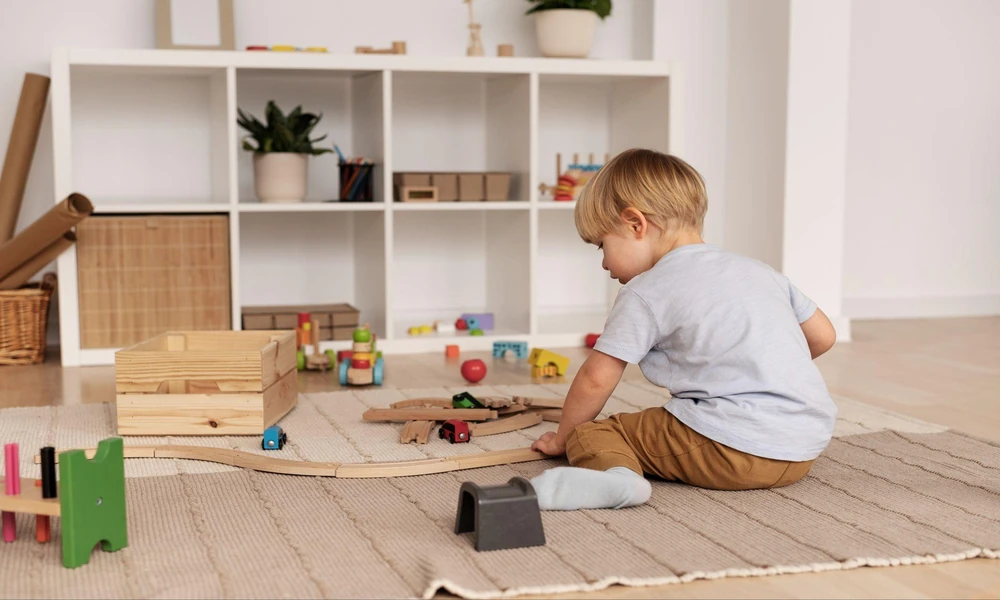
One of the most distinct features of the Reggio Emilia approach is the physical space. In this philosophy, the environment is often referred to as the “third teacher” (with parents and educators being the first two). Classrooms are intentionally designed to be aesthetically pleasing, organised, and full of natural light. You won’t find many plastic, battery-operated toys here. Instead, you’ll see “loose parts”-items like stones, shells, buttons, and wooden blocks-that can be used in infinite ways. These materials encourage open-ended play and creative problem-solving. A simple piece of driftwood can become a boat, a bridge, or a prehistoric creature, depending on the child’s imagination.
The layout of the school is also important. There is often a central space, or “piazza,” where children from different age groups can meet and interact. This encourages a sense of community and social learning. Walls are often replaced by large windows to connect the indoor learning space with the natural world outside. This connection to nature is vital, as it teaches children to appreciate and care for the environment. By carefully curating the space, educators provide constant invitations for children to explore, experiment, and learn without needing constant direct instruction. It is a peaceful, inspiring way to spend a school day, wouldn’t you agree?
The Power of Documentation and Reflection
Documentation is much more than just keeping a scrapbook of a child’s work. In the Reggio Emilia approach, it is a vital tool for learning and communication. Teachers use photographs, video recordings, and transcribed conversations to make the children’s learning “visible.” By displaying this work on the walls at the children’s eye level, the school creates a record of their thoughts and progress. This allows the children to look back on what they have done, reflect on their challenges, and feel a sense of pride in their accomplishments. It turns a temporary activity into a lasting memory and a learning milestone.
For parents, documentation provides a window into their child’s daily life that a simple “fine” at pickup time never could. You can see the process of how they solved a puzzle or how they cooperated with a friend to build a tower. It creates a bridge between home and school, allowing parents to participate in the educational journey. Furthermore, it helps teachers plan future activities. By reviewing the documentation, they can see exactly where a child’s interest is heading and prepare the next set of materials or questions to support that growth. It is a continuous loop of observation, action, and reflection that keeps the curriculum dynamic and relevant.
Expressing the Hundred Languages of Children
The concept of the “Hundred Languages” is perhaps the most poetic aspect of this philosophy. It suggests that children have many different ways of expressing themselves and making sense of the world. They might use drawing, painting, clay, music, movement, drama, or building. In many traditional systems, these “languages” are often discouraged in favour of just reading and writing. However, the Reggio Emilia approach celebrates all of them. Each child has a unique way of communicating, and by providing a wide variety of tools and media, the school ensures that every child can find their voice. It’s about honouring the diverse talents of every individual.
Art is not seen as a separate subject to be taught on Friday afternoons; it is integrated into everything. If a child is learning about insects, they might sculpt a beetle out of clay or paint the patterns they see on a butterfly’s wings. This multi-sensory approach ensures that the concepts stick. It also allows children who might struggle with verbal communication to show their deep understanding through other means. By valuing all these different “languages,” we tell children that their unique way of thinking is important. This builds an incredible foundation for lifelong creativity and self-expression. You know what? When children are given the freedom to express themselves fully, they often surprise us with their depth and insight.
Conclusion
The Reggio Emilia approach offers a refreshing and deeply respectful way to educate young children. By viewing them as capable protagonists, designing inspiring environments, and valuing their many “languages,” we help them develop into curious, confident learners. In the context of a busy city like Singapore, this philosophy provides a much-needed space for creativity and child-led exploration. It isn’t just about preparing them for the next stage of school; it is about honouring their childhood right now. Seeing your child flourish in such a supportive environment is one of the greatest joys a parent can experience. To learn more about how we implement these principles, please contact us at Apple Tree Playhouse.
